Is Britishness still a selling point for brands?

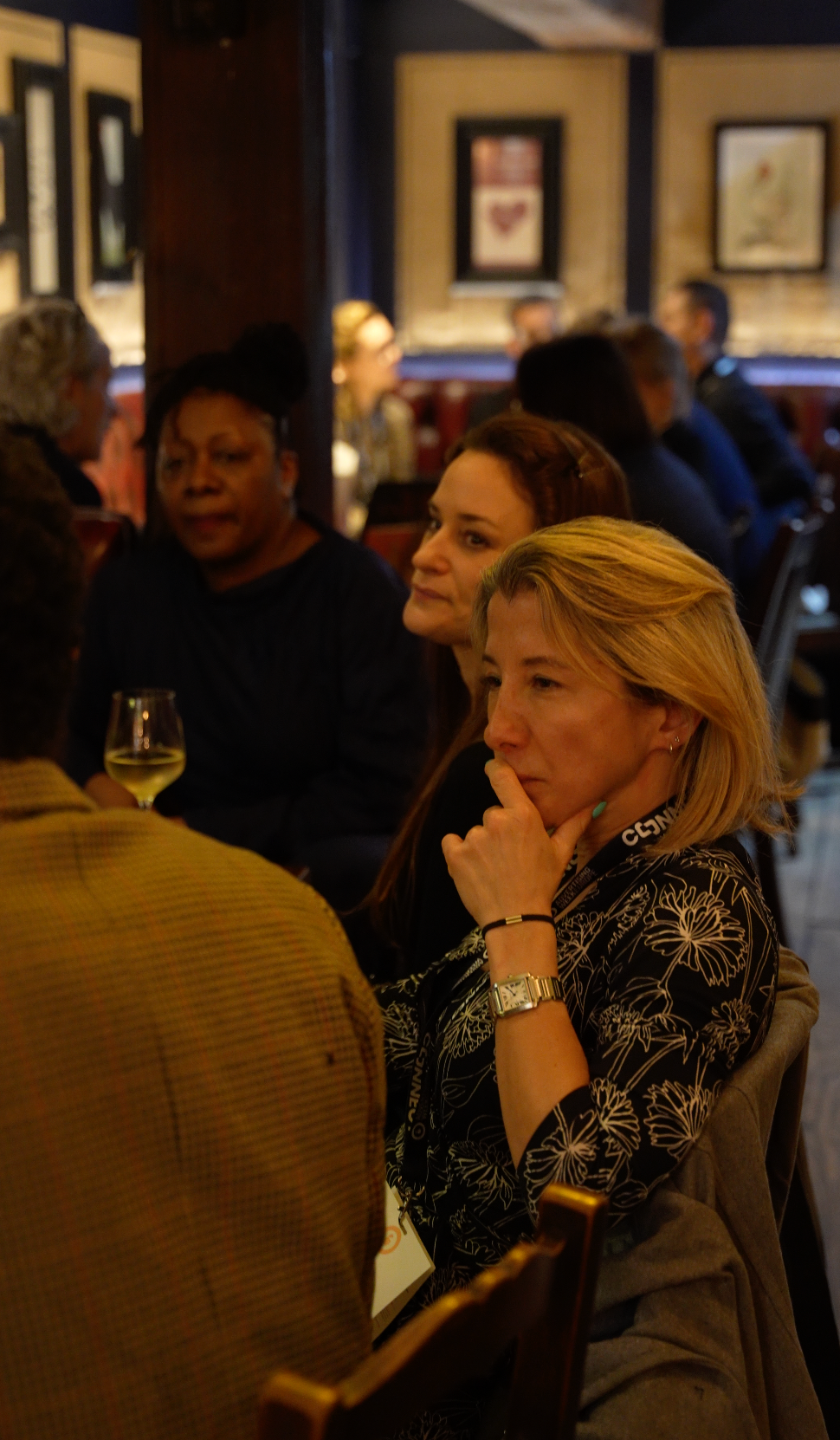
Following our Relevance on Tap discussion, we headed over to ‘Ye Olde Cock Tavern’ a Greene King pub just down the road to settle in for some food and a pint, carrying the conversation into a special Advertising Week edition of our Dine and Debate series, where we bring businesses together to explore significant social and cultural developments shaping the environments organisations operate within. Over a buffet pub lunch, the discussion centred on a simple but loaded question: is Britishness still a selling point for brands?
With everything we had just discussed still sitting in the background, we found ourselves almost hyper-aware of what Britishness meant in practice. It made us more sensitive to how we were interpreting it in the moment. Across the room, we all started to unpick the small, everyday interconnected behaviours that felt distinctly familiar about British life.
It was funny how quickly those shared patterns surfaced in reality. Meeting your mates for a debate over a pint is something most people do without thinking twice about it, and in our case, the Greene King team had served a buffet alongside the discussion, bringing the “dine” into Dine and Debate. But when the food emerged, no one dived in in a frenzied free-for-all. Instead, people hesitated, waited for someone else to make the first move, and then slowly followed, forming an orderly queue without being asked. It was subtle, almost automatic, but recognisably British.
On our table, the conversation moved between perspectives. From a global point of view, Britishness is still something that gets consumed as a kind of cultural shorthand. People look from the outside and see it as something unique, whether it's a particular style, an accent, a tone of humour, or a mix of heritage and modern city life that shows up everywhere from Peaky Blinders to Top Boy. There is something there that travels and spikes attention.
From a UK business perspective, we looked at brands that have held onto that identity over time. Yorkshire Tea came up, as did the supermarkets, with products and moments that feel unmistakably British and have never really moved away from that positioning. That consistency has made them recognisable and, in many cases, trusted.
But what started to emerge more clearly was a more difficult question about which version of Britishness is actually being presented, and who that version serves. For some people, particularly those from marginalised or diaspora communities, Britishness as a singular, unifying idea can feel excluding rather than connecting, especially in a climate where issues around racism, xenophobia and social mobility remain very present. That raises a more practical question for brands about whether what they are putting out actually connects across different experiences, or whether it only resonates with a narrower group.
So we turned to an example of a British brand connecting with groups that perhaps may have felt excluded, looking at Tesco’s Ramadan campaign, something The Unmistakables had been involved in shaping. I promise we didn’t pay to have it brought up, but its unprompted emergence was telling. It reflected an understanding of the current needs and realities of different audiences in the UK and showed how acknowledging those moments cuts through not just on a moral values level but in how brands connect with people in practice.
Where we landed was less about whether Britishness still works as a selling point and more about how it is understood. Brands still need to connect with the most people possible, but that requires seeing Britishness for what it means to different communities, rather than as a fixed idea. The responsibility lies in understanding those nuances, finding the connecting threads in everyday life and not being prescriptive about what Britishness should be or how it should be expressed.
In that sense, Britishness is still a powerful asset for brands, but only when it is approached in a way that reflects the range of people it is supposed to represent.